Table of Content
Every time you adjust one thing, it will affect something else. It’s also nice to use two people, one to make the adjustments and the other to stand by the screen and give feedback. This is especially true if the projector is far away from the screen. Enlisting the help of a significant other or friend is a good idea when attempting the next step. Verify everything is secure, then lift up the projector and attach it to the ceiling plate.

Nonetheless, initial viewing of the out of the box picture modes provided a pleasing image if the color temperature was changed to Warm. White was obviously still off but since it was biased towards blue it was not overly offensive. Colors were off as well, and the only color that was close to displaying accurately was yellow.
Editors’ Choice 2022: My Favorite Wireless Speakers
If this is a basement theater, then I think you can relax that rule since the ceilings are less hot than upstairs, but a flush mount may still give trouble. With a hush box and forced ventilation, that problem gets transferred to the hushbox design. The vertical offset looks OK, but always check the adjustment range of your model, and stay away from the extremes of the range. I just bought a Sony HS3 projector, and I'm grappling with the issue of where to put it. It's pretty flexible in that it can be adjusted to work from the side, but I'm wondering how much that degrades the picture.

Thankfully, nearly all modern projectors have a zoom adjustment, which allows you to adjust the size of the image without actually moving the projector closer or farther away from the screen. This can give you great flexibility when figuring out the proper distance from the wall for your projector. Utilizing the provided Color Temperature adjustment, 2-point gain and bias controls, and 11-point White Balance correction for adjustments I targeted the production industry standard D65 neutral gray white point. Afterwards, a full CMS calibration for the RGBCMYW primaries and secondary colors was performed as well.
Horizontal lens Shift: How far off to the side?
Find out what Signal-to-Noise ratio is and why it's important for your audio listening experience. For more detailed specifications and connections, check out our Formovie THEATER projector page. The bottom line is that the Formovie Theater is competitively priced and performs at a much higher level than its price would indicate. It also outperforms other offerings in the UST space that potentially cost more.
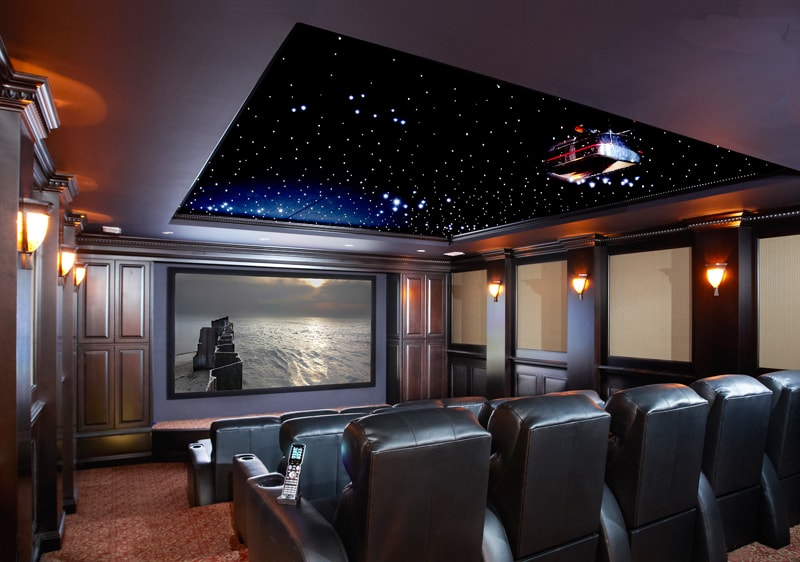
HDR10 is widely used in UHD discs and movie streams, and what we typically report on. Measuring ANSI lumens involves taking measurements at each of the nine points indicated by the large black dots shown here.Contrast Ratio. A home theater projector's contrast ratio is an important performance criterion, defined as the difference between the darkest black and brightest highlight the projector can reproduce. Contrast is what gives images dimensionality, makes black look black on darker scenes instead of a washed-out-gray, and makes shadow details and gradations more visible in darker areas of the picture. Unfortunately, contrast ratio specs are misleading and meaningless for comparing projectors of different brands. Unlike with brightness, there is no universally accepted standard or technique for reporting contrast ratio.
TOP 10 HOME THEATER
(Image courtesy of Maxell.)That said, if you intend to use a projector as a TV replacement in your lit family room, 4K UST laser projectors are the exception to this rule. You can learn much more about these projectors in The Ultimate Guide to 4K UST TV Projectors, where we have a full product listing. Everyone agrees that the above image show a projector with 0% offset; however, you will find conflicting information about the image below. If you poke around the internet a bit, you will find people that refer to this as 100% offset, but that is incorrect.
I normally make the image a little larger than the screen to ensure that the entire screen is filled. Any part of the image that spills over will be absorbed by the screen frame. Sometimes I will purposefully make the image too small while performing other adjustments and only zoom out to the cover the full screen when everything else is dialed in. This is because it can be easier to tell if pitch, roll, or yaw are incorrectly set when you can see the border of the image on the actual screen, as opposed to the frame around the screen.
You'll see projectors noted as having a "1.2x" or "1.6x" zoom, which represents the ratio of the focal point from the widest to the longest lens position. Keep in mind that you'll lonly set up your projector once for a permanent install. If you can position the projector appropriately it may not make sense to pay more just to get a longer zoom. Better home theater projectors have a color mode that closely follows these industry standards, including a neutral-gray "D65" color temperature for white. It will usually deliver the most accurate skin tones and most natural colors on everyday objects we know like foliage and blue skys. For our reviews, we use test instruments to find the best picture modes.
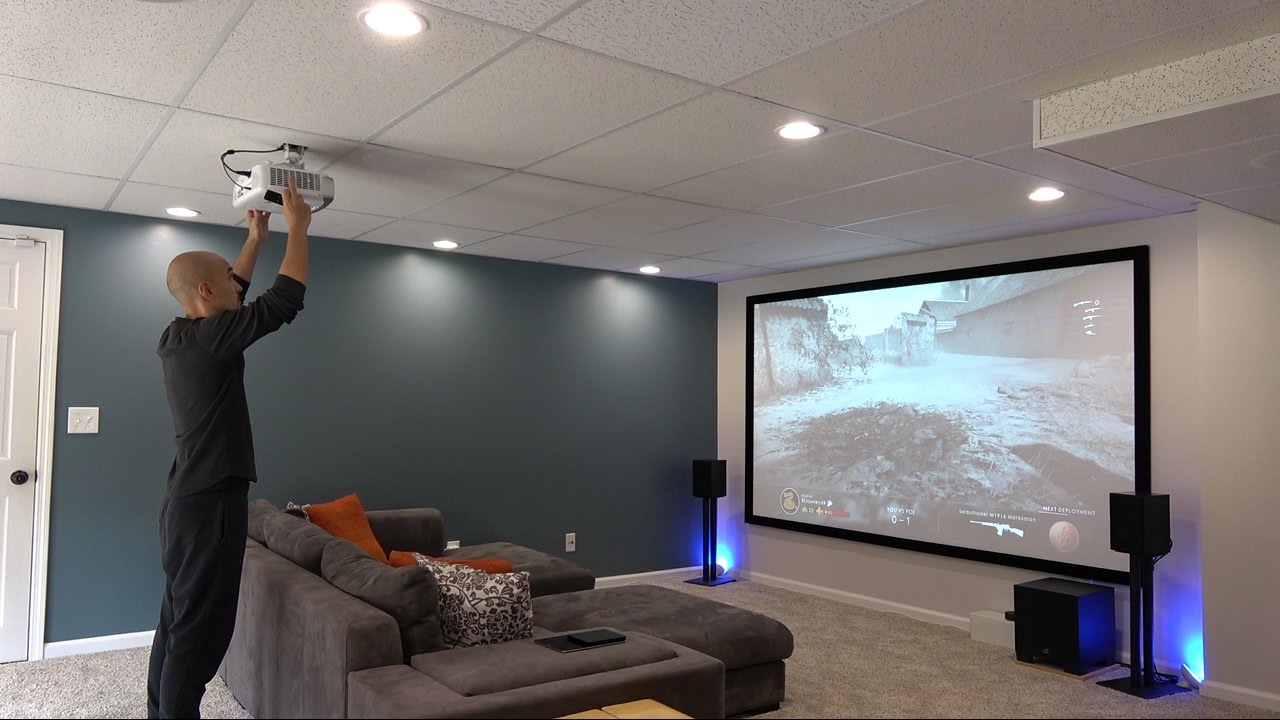
Setting up a video projector is definitely different than setting up a TV, but in most cases, is it still pretty straightforward, if you know the steps. Here are some tips to keep in mind that you can use to get your video projector up and running. Theses features give you a certain level of flexibility when planning the projector position during the home theater room design. Vertical offsettells you how high or low the projector needs to be mounted in order for the image to project at the proper height on the wall.
This means that the center of the lens needs to be lined up with the vertical center of the screen. Consumers want the projector to be out of the way, this is why manufacturers incorporate vertical offset. You will need to buy a quality mount for mounting your projector, especially when you want it on the ceiling or wall.
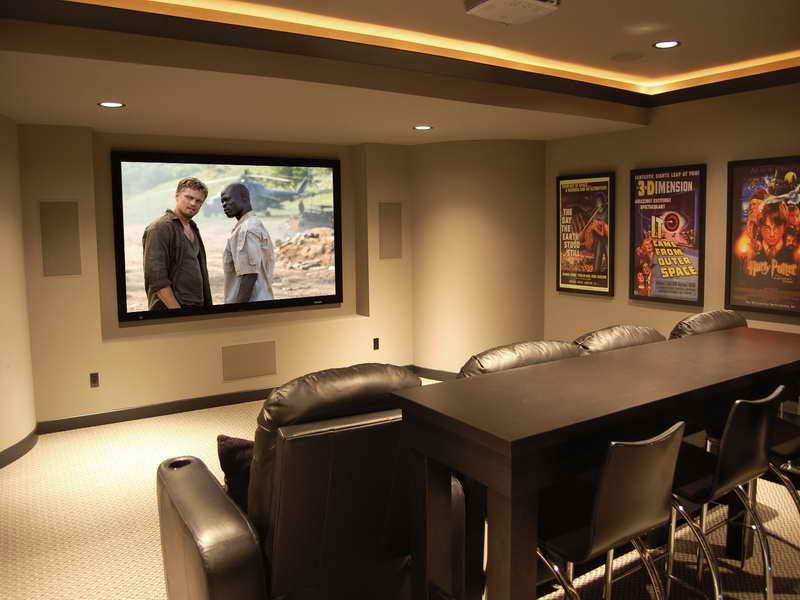
This puts my throw distance at about 10'6" max . I can move the projector back, but this would force me to mount it lower. This would affect viewing from the bar behind and make it overall just less visually appealing. BenQ continues to innovate home theater projectors with advanced features and superb picture quality to maximize movie fun and family enjoyment in a variety of environments. Whether you’re new to projectors or a home cinema connoisseur, use the projector buying guide to find the perfect home theater projector for a whole new visual experience. A home theater projector is the ideal entertainment choice for movie lovers. And it’s easy to choose the perfect projector for watching movies, playing games, and family fun.
You always start by attaching the projector plate to the top of the projector. Note that leveling the projector is easiest if you center the plate on the projector and ensure the plate is close to level. Your very first task is to determine the best location for the screen.
Another scene that did very well was when Maleficent went to the castle where she cast her curse on the baby Aurora. The scene didn't suffer too much from lifted blacks; you might notice some if you have seen this scene a lot, but it overall looked really good. The detail in the costumes, and the green effect coming off Maleficent while she finished her curse, all rendered very well. Additionally, the projector offers one 3.5mm analog audio output, one S/PDIF optical output, two USB 3.0 Type A inputs which can be used for media playback, and one LAN port to use in lieu of Wi-Fi.
My only two real complaints with the interface are, first, that settings don't carry over from input to input, or from input to apps for a selected picture mode. So, after dialing in a picture mode, those settings will need to be reentered again for another input. The second complaint would be that adjustments to the 11-Point White Balance Correction, itself an unusual feature for any projector, is global across every picture mode, and every signal format, across all inputs. This isn't great, but it's not awful either, as once you get the white balance correct that universal setting translates well to other picture modes. However, I personally like the ability to tailor and refine an individual picture mode even more.
The Formovie Theater provides substantial picture controls for grayscale, color temperature, and color management adjustment in all available picture modes. The Color Temperature controls allow for adjustment to the User Color Temperature preset. Values are shown for the other color temperatures, however, if any adjustment is made to them, the mode automatically switches to User CT. So, the other predefined color temperatures cannot actually be adjusted. This is what I was referring to above when I mentioned you can only adjust one color temperature setting, but it can be used universally with all picture modes if desired.


No comments:
Post a Comment